Caulk Tube Spout Saver
Don't discard half-used caulk tubes, slit the nozzle on both sides and pry out the plug. Find out how with this tip.

What to do with half-used caulk tubes
Don't discard half-used caulk tubes just because the nozzle is plugged upward with dried caulk. Slit the nozzle on both sides and pry out the plug. Then tape the nozzle halves back together with electric tape and get back to work. Thank you to Larry Stewart for this salvager's delight.
More Great Caulking Tips
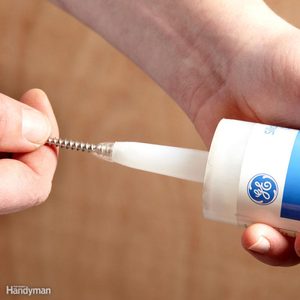
Clean the Spout With a Screw
It seems you tin can never seal the cut tip of a partial tube well plenty. A plug commonly forms in the tip. Try using a large screw with ambitious threads to remove the plug. This tip works all-time with silicone products.
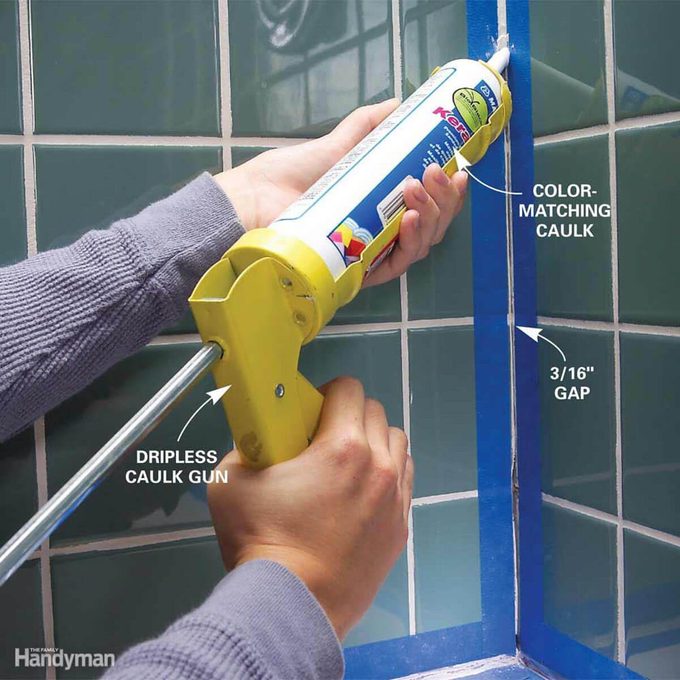
Record Earlier Caulking
Apply painter'southward record to control your caulk lines. Apply the caulk, smooth the joint with your finger and immediately remove the tape.

Choose the Right Caulk for the Job
The selection in the caulk aisle at domicile centers is mind-boggling, but actually choosing the right one is pretty simple. Most of the caulk on store shelves is basically i of 4 types: elastomeric, polyurethane, latex or silicone. Here's how to choose the correct caulk:
- Siding, windows and doors: Polyurethane is best. It's paintable. It doesn't shrink. It stays flexible. It adheres better than silicone, and it doesn't attract dust and dirt the mode silicone does. Roofing: Utilise an elastomeric or rubberized product. This stuff won't dry out in farthermost atmospheric condition, and it sticks to everything.
- Interior trim: Use latex if you lot're sealing gaps and nail holes in trim that's going to be painted. It cleans up easily and dries fast. Information technology's also easy to tool—and cheap.
- Kitchen and bathroom: This is where silicone products shine. Silicone tools well. It can be purchased with antimicrobial additives, and can be hands removed and replaced when it gets grungy.
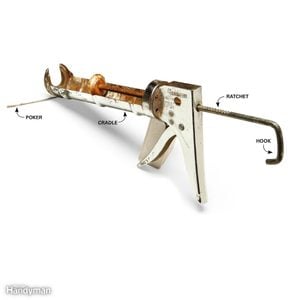
Choose the Right Caulk Gun
The virtually expensive caulk gun on the rack isn't necessarily the best. Look for a gun with a cradle. Tubes seem to fall out of the guns with the rails. Choose guns with ratchet action rather than friction action and don't consider a gun that doesn't have a hook. Forget about gun-mounted tube cutters—use a utility knife. And if all other things are equal, purchase the gun with the longer tube poker. Some aren't long plenty to work on every kind of tube.
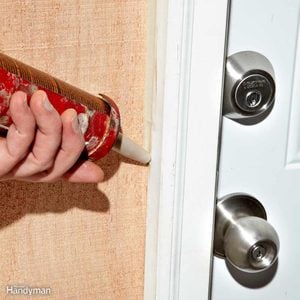
How to Use a Caulk Gun: Push button the Caulk, Don't Pull
Endeavor to push the caulk into the gap rather than elevate information technology over the gap. This greatly increases the odds the caulk will adhere to both surfaces because it forces caulk into the gap—pulling doesn't. One exception to this dominion is when both surfaces are affluent. When caulking flush surfaces, if you effort to push the tip too difficult, it will skate all over the place, and y'all'll take a big mess on your hands.
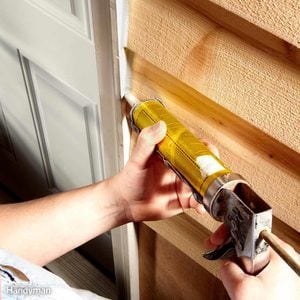
How to Use a Caulk Gun: Ride the Tip on the Smooth Surface
When one of the surfaces y'all're caulking is rougher than the other, effort to ride the tip on the smoother surface (the brick mold in this case). If you ride the middle or the rough surface (siding), the caulking will indistinguishable the bumps, sometimes in an exaggerated way.
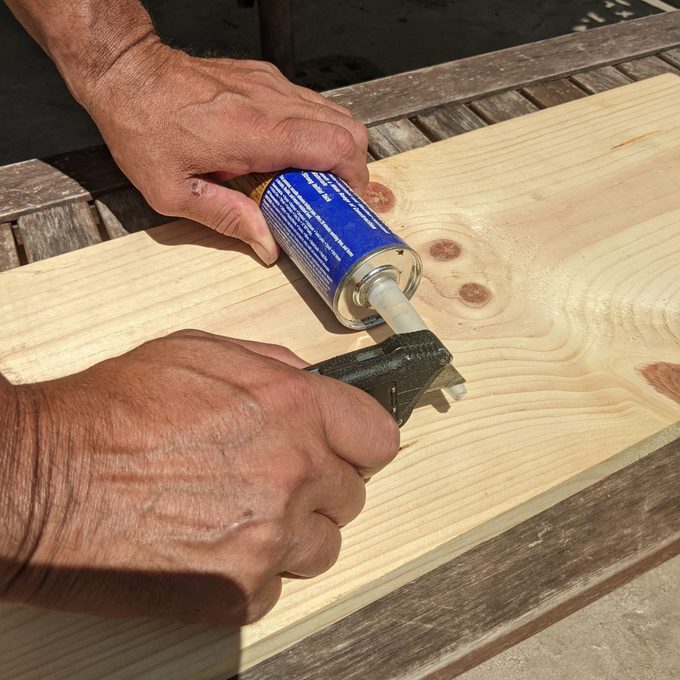
Cut Tips Off Directly
You probably learned to cut the tip at an bending. That works OK in some situations, but an angled tip limits the position the caulking gun has to be in. With a directly tip, you can swivel the gun out of the mode of obstacles and caulk correct up to an inside corner. And if you have various-size gaps to fill up, cutting the tip small and exercise the small gaps first, and so cutting it bigger for the larger gaps.

How to Apply a Caulk Gun: Don't Use Your Wrists
Every golfer knows that the best manner to go on a doodle moving in a straight line and at a consequent speed is to command it with the upper body. It'south the same with caulking. Utilise your upper body, or fifty-fifty your legs, to move the tube forth, non your wrists.
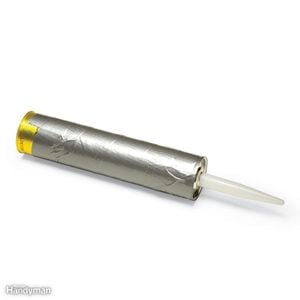
Salvage a Moisture Tube
The new guy left the instance of caulking out in the rain again (it's e'er the new guy). Those soggy tubes are now going to split up open under pressure. Before that happens, wrap some duct tape around the tube. Yous can likewise salvage tubes with house wrap record, masking tape, stretch wrap, aircraft record—it all works. Only utilise whatsoever's handy.

Avert Globs on Long Runs
When you have a long bead to run and you tin can't get it done in one shot, don't start again where you left off. Instead, start at the other stop and run across in the middle. It's hard to continue a bead once you've stopped without creating a glob. Too try to keep the coming together place somewhere other than eye level.
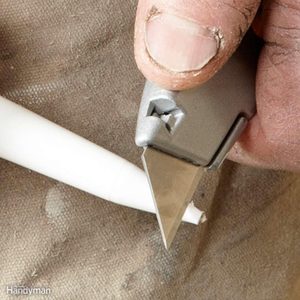
Fast Caulking
A mutual fault is to cut off too much of the caulk tube tip, leaving a hole that's way too big for most interior caulking work. When y'all're filling small cracks to set up for painting, cut the tip advisedly to proceed the hole tiny—near i/xvi in. in bore. The tiny hole lets out only enough caulk to fill typical pocket-size- to medium-size cracks. For larger cracks, make a second laissez passer or proceed a second caulk gun on hand, loaded with a tube that has a slightly bigger hole. Go along the caulk gun moving quickly along the fissure as you squeeze the trigger. This, combined with the small opening in the tip, will give yous a prissy caulk articulation that needs very lilliputian cleanup. A quick swipe with a dampened fingertip will leave a paint-fix joint.
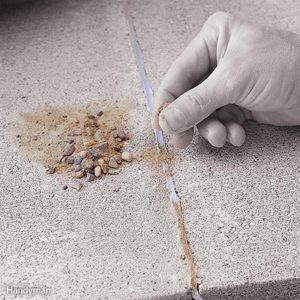
Disguising Caulk on Concrete
If you're caulking concrete, either to make full a crevice or to seal it around the border, yous can make the caulk almost invisible. Simply dust the caulk with dry physical mix while it's however moisture. When it's dry out, brush abroad the excess, and the caulk will nearly disappear.
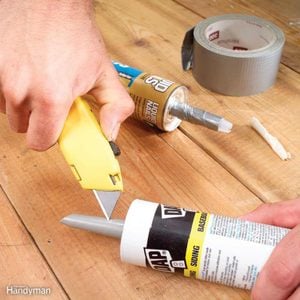
Reusable Caulk Tube
How often do y'all have dry caulk stuck in the tip of the tube but know that in that location's a lot of fresh stuff behind it? Get to the fresh stuff by start cutting 2 slits forth the tube, on opposite sides, with a sharp utility knife. Pry out the dried plug of caulk. Then wrap the tip with duct record, put the tube dorsum in the gun and use up that caulk.
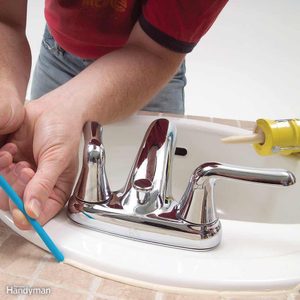
Caulk With a Straw
When you lot need to caulk in a spot that's too tight for a caulk gun, try this: Cutting a abrupt angle on the end of a plastic harbinger, just as you'd cut the spout of a caulk tube. Then fill up the straw with caulk using a caulk gun. Fold over one end of the harbinger and squeeze caulk out the other stop. Y'all can lay a bead of caulk in cramped quarters this way, but information technology's hard to squeeze out a consequent, even dewdrop. So keep a clammy rag handy and plan to polish the dewdrop with your finger.
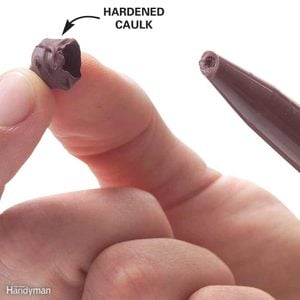
Seal Caulk Spout
Every tube of caulk contains its own spout sealer. Forcefulness enough caulk out of the tube to class a peanut-sized brawl. Then wet your finger and shape the brawl to class a cap. The cap volition slowly harden and keep the caulk inside soft for weeks.
Source: https://www.familyhandyman.com/article/caulk-tube-spout-surgery/
0 Response to "Caulk Tube Spout Saver"
Post a Comment